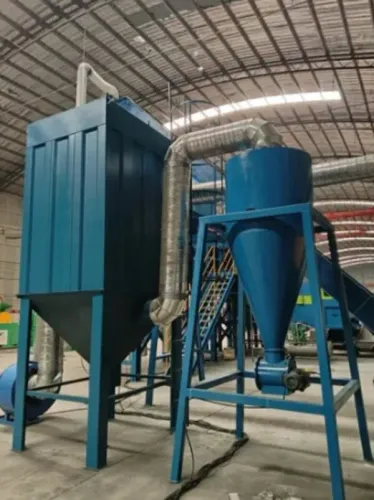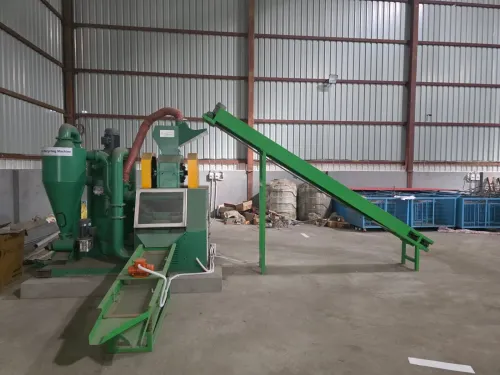
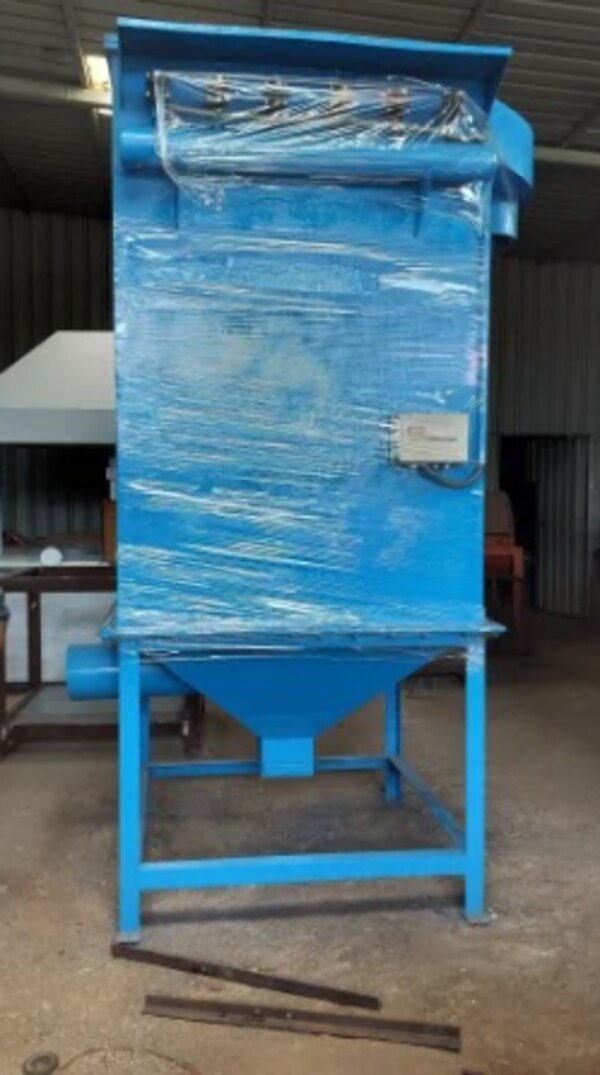
The right supplier depends on your dust, pickup points, airflow, pressure loss and required outlet-air quality—not just the collector’s motor size. You will be able to identify credible buying options in Ghaziabad, prepare a comparable quotation request and test whether the proposed system will protect workers and control emissions.
Key takeaways
- Request a site visit and airflow design, not only a motor rating.
- Send dust type, particle size, process hours and pickup-point details.
- Compare filter area, pressure drop, controls, service and spare-parts access.
- Add explosion protection when combustible dust can form an ignitable cloud.
Where to Find Industrial Dust Collector Suppliers in Ghaziabad
Contact a dust collector manufacturer in ghaziabad first if you need an industrial dust collector for sale in ghaziabad with matched hoods, ducts, fan, filters and controls. Search workshops and industrial suppliers in Sahibabad, Site IV and the Bulandshahr Road industrial area, then request a site visit rather than relying on a catalogue motor rating.
Send the same short brief to these local options:
- A complete-system manufacturer: ask for hood and duct drawings, airflow at each pickup point, fan curve, filter-media data, controls drawings, commissioning support and a written performance warranty.
- An industrial ventilation dealer: use one when the equipment is a standard cartridge unit, baghouse or cyclone, but confirm who designs the ducting and accepts responsibility for capture performance.
- A local fabricator: consider it for tanks, hoppers, ductwork and frames when lead time matters; fabrication alone does not prove airflow, filtration or emission performance.
- A maintenance or retrofit contractor: contact one when replacing filters, repairing leaks or adding extraction to an existing line, and ask for measured airflow before accepting a proposal.
| Option | Check before requesting a quotation | Best fit |
|---|---|---|
| Manufacturer | Complete design, fan curve, filter data, testing and warranty | New process lines |
| Dealer | Brand scope, installation partner and spare-filter pricing | Standard replacement units |
| Fabricator | Drawings, balancing method and performance responsibility | Custom ducting or hoppers |
| Service provider | Baseline airflow, pressure readings and repair report | Existing collectors |
How to Compare a Ghaziabad Supplier With Dealers and Outside Vendors
A low price proves only that steel and a motor have been priced. A credible quotation proves how the complete system will capture, filter, discharge and perform at your line.
| Option | Evidence to demand | Warning sign |
|---|---|---|
| Complete engineered supplier | Hood and duct drawings, branch airflow, fan curve at stated m³/h and total static pressure, filter-media data, controls schematic, commissioning plan and written performance warranty | Only collector size and motor horsepower are listed |
| Local fabricator | Fabrication drawings, material thickness, access-door details, filter-cleaning method and a named engineer responsible for balancing | “Custom-built” is offered without airflow calculations or test records |
| Marketplace seller | Manufacturer identity, model datasheet, test method, outlet concentration and spare-filter price | A filtration percentage appears without particle size, inlet loading or test standard |
| Out-of-city supplier | Site-survey method, installation scope, freight, service response time and commissioning responsibility | Delivery ends at your gate |
Compare total operating cost, not just fabricated-steel price. Add fan electricity, compressed-air use, filter replacement, contaminated-dust disposal, cleaning downtime and inspection access.
Ask every dust collector manufacturer in ghaziabad to identify the applicable UPPCB consent and emission conditions for your process. Treat the quotation as an engineering proposal, not proof of compliance; the actual consent depends on the pollutant, fuel, stack, capacity and operating conditions.
For industrial dust collection equipment, require these documents before awarding the order:
- Hood locations and enclosure details
- Duct sizes, branch airflow and balancing data
- Pressure-drop curve and expected filter life
- Electrical, alarm and interlock documentation
The same comparison lets you assess Privi against a dealer: request identical drawings, test evidence, operating assumptions and after-sales scope rather than comparing brand names.
Related products
 | DUST COLLECTOR Giant vacuum for factories that traps fine dust from air. Hoods/Ducts: Capture dust at source (grinding, cutting). Fan: Sucks dirty air inside fast. View product → |
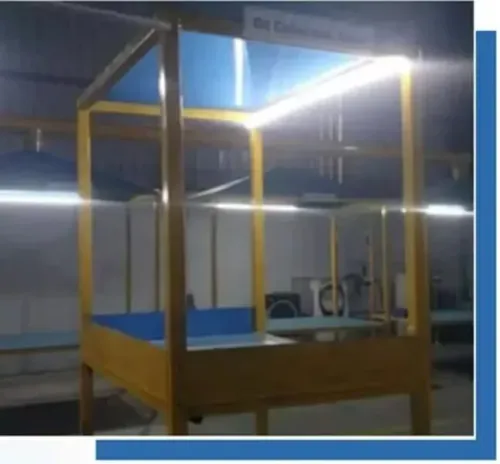
 | Pipeline for Dust/Fumes/Smoke sucks bad air from the dismantling table using a hood over the work area. View product → |
What to Send Before Requesting a Dust Collector Quotation
Send a one-page process sheet before asking for a price; without it, two quotations can describe different machines under the same “capacity” label. Identify the source equipment, pickup points, operating schedule, and whether the system is a dust collector for manufacturing unit or a dust collector for recycling plant.
- Process: name each machine, material handled, number of pickup points, required simultaneous operation, and hood or enclosure arrangement.
- Dust: provide material composition, particle-size distribution, bulk density, moisture or oil content, inlet temperature, dust loading in mg/m³, and combustible content.
- Performance: state airflow at each pickup point, operating hours per day, permitted outlet concentration, test particle size and test method.
- Layout: attach a sketch showing duct lengths, diameters, bends, elevation changes, collector location, discharge point, stack height and available electrical supply.
- Discharge and safety: specify rotary airlock, screw conveyor, bin or sealed drum; include changeout access and disposal route. For e-waste, provide contaminant analysis for lead, mercury, cadmium and other metals.
| Quotation item | Require from the supplier | Why it matters |
|---|---|---|
| Airflow and fan | m³/h at total static pressure, including hood, duct, filter, discharge and stack losses | Motor horsepower alone cannot prove capture |
| Filter | Media, filter area, clean-air-to-cloth ratio, release method, pressure-drop curve and expected life | A filtration percentage without test conditions cannot be compared |
| Safety | Ignition controls, spark detection, isolation, venting or suppression, grounding and indoor-air return decision | Shredded plastics and mixed residues can create fire or explosion hazards |
| Compliance | Applicable UPPCB consent and emission conditions for the actual process and site | A quotation is not proof of regulatory compliance |
How to Size the Collector for Each Pickup Point
Size the collector from the airflow and total static pressure required at the pickup points, not from motor horsepower. A dust collector for manufacturing unit applications fails when the fan cannot overcome hood resistance, duct friction, filter loading, bends, discharge equipment and stack losses.
1. Set hood airflow for each source. Grinders need capture close to the wheel; shredders need enclosed connections; cutting stations need a hood that intercepts the cutting plume; dismantling tables need controlled airflow across the work area. Record each branch airflow in cubic metres per hour and show the hood location on the drawing.
2. Select duct diameter from the required airflow and a velocity that keeps this dust moving. Oversized ducting lets material settle; undersized ducting increases friction, noise and fan energy. Include every branch, elbow, reducer, flexible connection and access door.
3. Calculate total pressure loss by adding hood entry loss, branch and main-duct friction, fittings, collector resistance, rotary valve or screw conveyor resistance, and outlet or stack loss. Ask for the calculation at dirty-filter pressure, not only at a clean filter.
4. Size filter area from airflow, dust loading, particle size, moisture and the selected filter media’s air-to-cloth ratio. Require pulse-jet air quality, cleaning sequence and maximum allowable pressure drop; wet dust or poor compressed air can blind cartridges or bags.
5. Select the fan at the design airflow and total static pressure, then verify its curve, efficiency and motor margin. Industrial dust collection equipment quoted by horsepower alone is not comparable. Require balancing measurements at every branch during commissioning.
Which Collector Technology and Safety Controls Fit Your Process
Choose the technology by dust behaviour, not motor size. A dust collector for recycling plant operations must handle particle size, moisture, temperature, loading and ignition risk before you compare an industrial dust collector for sale in Ghaziabad.
| Technology | Best fit | Main limitation |
|---|---|---|
| Cyclone | Coarse, heavy particles and high dust loading; useful as a pre-cleaner | Poor capture of fine dust; rarely the final filter |
| Baghouse | High-volume, fine or hot dry dust from shredders and grinders | Needs filter cleaning, space and moisture control |
| Cartridge unit | Fine dust where compact equipment and high filtration area matter | Wet, oily or fibrous dust can blind cartridges |
| Wet scrubber | Sticky dust, sparks, fumes or gas absorption | Creates wastewater and corrosion; capture depends on liquid control |
| Source extraction | Dust captured at the hood beside a dismantling or cutting point | A distant collector cannot rescue a badly positioned hood |
For recycling lines, assess shredded plastics, paper, textile fibres and mixed residues for combustible-dust hazards. Specify spark detection, automatic suppression, explosion venting or suppression, duct isolation, grounding and a decision on whether filtered air may return indoors.
Before accepting industrial dust collection equipment, require:
- Measured airflow at every hood, balanced branches and total static pressure against the fan curve
- Filter-media specification, clean and dirty pressure-drop limits, leak test and outlet emission result
- Interlocks for fan, pulse cleaning, hopper discharge and fire protection, plus commissioning records
- Applicable UPPCB consent conditions for the actual process and stack; a quotation alone proves nothing
- Spare-filter pricing, drawings, controls documentation and a written performance warranty
Frequently asked questions
Where can you find industrial dust collector suppliers in Ghaziabad?
Search manufacturers and industrial suppliers in Sahibabad, Site IV and the Bulandshahr Road industrial area. Ask for a site visit, application references and a complete system quotation covering hoods, ducts, fan, filters and controls.
How should you compare a Ghaziabad supplier with an outside vendor?
Compare the engineered airflow at each pickup point, filter area, pressure-drop allowance, fan selection, installation scope, warranty, response time and local access to replacement filters and other spares.
What information should you send before requesting a quotation?
Provide the dust source, material, particle size, bulk density, moisture, temperature, combustible-dust risk, number of pickup points, duct distances, operating hours, available electrical supply and required emission limit.
How do you size a dust collector for each pickup point?
List every hood or machine connection, assign its required capture airflow, add the points that operate together, then calculate duct friction, fittings, filter pressure drop and fan static pressure. Do not size the system from motor horsepower alone.
Which dust collector technology and safety controls fit a manufacturing process?
Select cartridge, baghouse, cyclone or wet collection after checking particle size, dust loading, moisture, temperature and emissions. For combustible dust, assess bonding and grounding, spark detection, isolation, explosion venting or suppression, and safe dust discharge.
Keywords