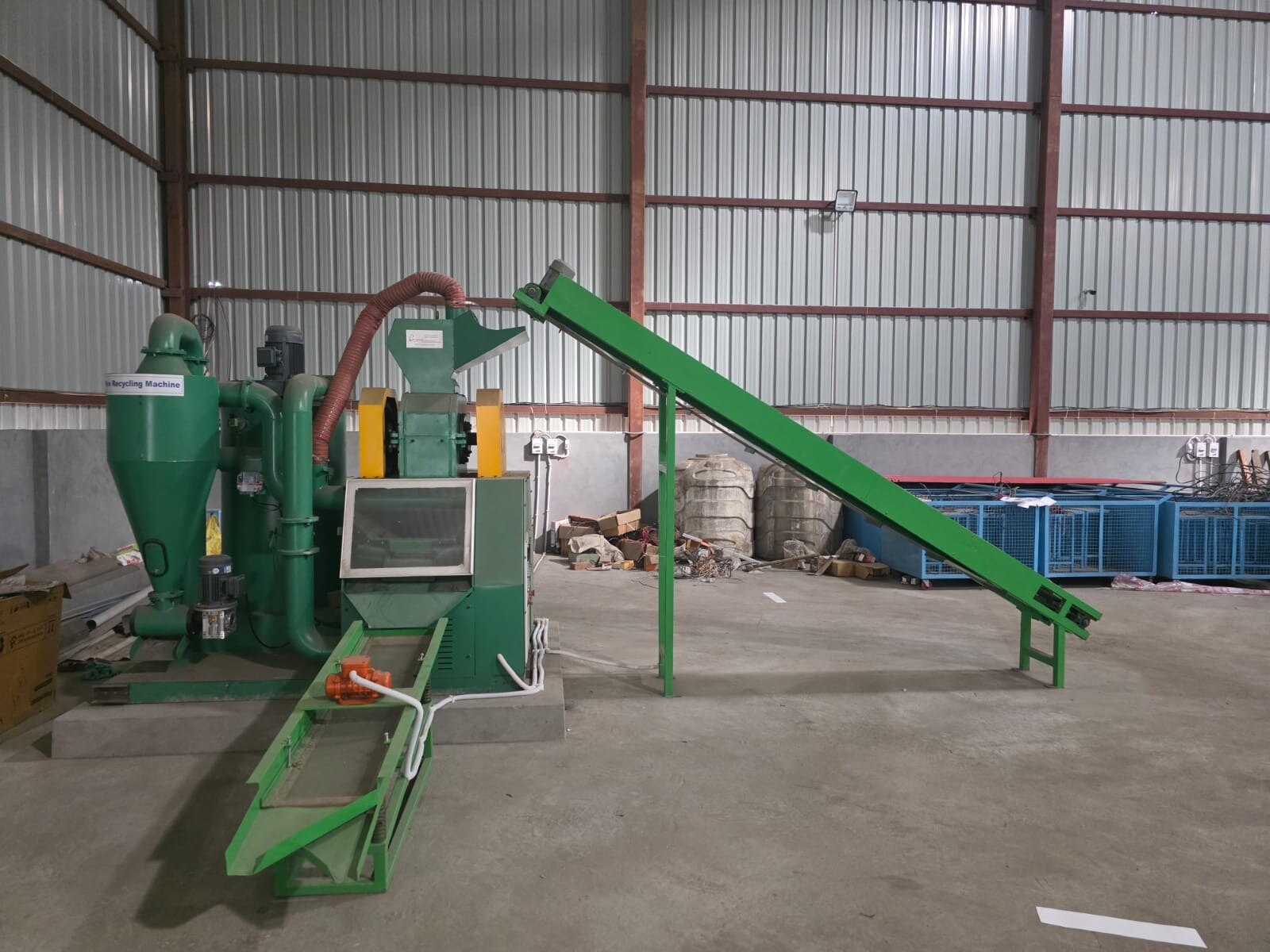
A PCB conveyor quotation can describe a belt and motor while leaving out the parts that determine safe loading, stable transfer and easy maintenance. By checking the package line by line, you can distinguish a conveyor for intact circuit boards from an electronic scrap conveyor belt and compare suppliers on usable capacity, controls, guarding and site fit.
Key takeaways
- Demand a component-by-component list covering the frame, belt, drive, guards, and controls.
- Put belt width, speed range, load rating, motor power, and discharge height on the quotation.
- Match loading equipment to PCB size, weight, sharp edges, dust, and mixed electronic scrap.
- Check alignment, emergency stops, electrical drawings, spares, and trial-run records before acceptance.
What a PCB Conveyor Belt Package Usually Includes
A complete PCB conveyor belt package names every physical and electrical item, rather than hiding omissions under “conveyor.” Standard PCB conveyor belt components usually include:
- Belt with specified material, width and length
- Fabricated frame, drive pulley, tail pulley, bearings, return rollers or slider bed
- Tensioning and belt-tracking hardware
- Geared motor, gearbox, coupling or chain drive
- Adjustable legs, side guides and fixed guards
- Control panel, emergency-stop devices, sensors and interconnecting electrical wiring
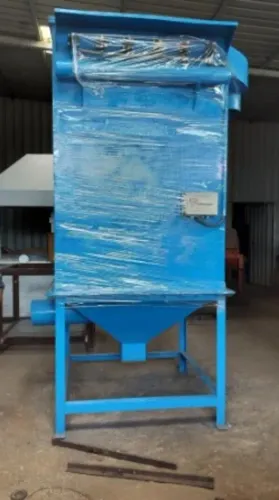
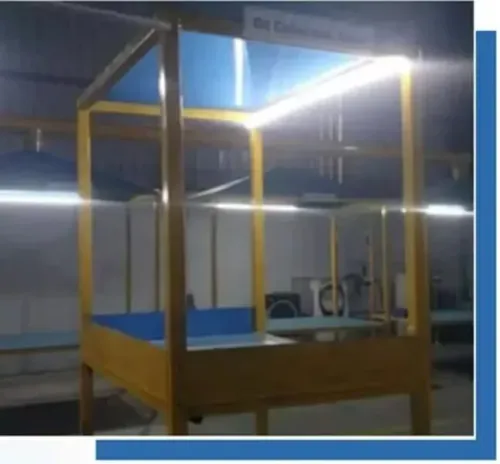
Casters, discharge chutes, product sensors, a feeding hopper, manual sorting cabin, dust-collection connections and cable trays frequently appear as separate lines. A conveyor-only quote also excludes shredders, separators and other plant equipment unless the supplier states otherwise.
Request a packing list for the PCB recycling conveyor inclusions. It must show each quantity, material, dimension and model, plus whether installation, commissioning and spare parts are included.
Confirm the incoming voltage, phase, frequency, earthing arrangement and panel enclosure before delivery; a standard motor and panel can fail commissioning when they do not match the Ghaziabad site supply.
Treat safety as part of the machine, not an upgrade. Verify guarding at the drive pulley and every nip point, emergency-stop coverage along the accessible belt, restart behaviour after an emergency stop and access for clearing jams without reaching into moving parts.
Ask how open transfer points and return runs connect to dust extraction when processing dusty scrap.
Which Specifications Belong on the Quotation
A quotation is incomplete unless it defines the conveyor’s working envelope, not just its motor size. Ask for these PCB conveyor belt specifications:
| Specification | What the quotation must state |
|---|---|
| Usable capacity | Usable belt width, overall belt length, maximum distributed load, maximum lump size, belt material, and frame material |
| Movement | Belt speed range, throughput in boards per minute or kilograms per hour, incline angle, elevation, discharge height, roller diameter, and available height adjustment |
| Drive and power | Motor rating, gearbox ratio, coupling or drive arrangement, voltage, phase, frequency, and duty cycle |
| Controls | Whether speed uses a variable-frequency drive, inverter, geared-motor arrangement, or another method, plus the actual operating range |
A stated 50–500 mm range proves nothing until the supplier identifies whether it means PCB width, board length, usable belt width, or the machine’s rated handling envelope. Motor horsepower alone does not prove capacity.
Compare speed against board size, spacing, loading pattern, inspection time, and downstream separation. A faster belt can reduce inspection accuracy or cause overlap at the transfer point. Require throughput in a datasheet or loaded site trial using your boards or scrap; do not calculate capacity from board dimensions alone.
For PCB conveyor belt equipment in Ghaziabad, request the proposed operating speed, not merely “variable speed,” and record the belt surface and load used for the quoted figure. That detail separates a usable machine from an optimistic specification.
How the Belt and Loading Method Change by Material
Intact boards need a smooth, non-slip belt and controlled placement; loose scrap needs a tougher surface that tolerates punctures, dust and irregular loads. Confirm whether “PCB” means whole printed-circuit boards or post-consumer scrap before comparing quotations.
| Material | Loading method | Belt and containment specification |
|---|---|---|
| Bare or populated boards | Manual placement, one layer, fixed orientation and spacing | Smooth non-slip surface, side-guide clearance, defined usable width and maximum layer depth; prevent overlap, edge falls and board-to-board collisions |
| Loose or mixed scrap | Metered hopper or supervised hand loading | Abrasion- and puncture-resistant cover, suitable thickness, robust splice, cleaning access and side containment for wire, leads, connectors and broken components |
Your PCB conveyor belt specifications should state the belt cover material, thickness, splice method and suitability for sharp-edged scrap. Ask for clean-out access beneath the belt and around return rollers; trapped fiberglass dust and wire quickly become maintenance problems.
PVC and PU are not interchangeable where electrostatic discharge matters. Ask whether the belt, rollers, frame and grounding arrangement support your ESD program; “anti-static” printed on a belt alone proves nothing.
For an incline, require the intended material, maximum angle, cleat or corrugation geometry and sidewall height. High friction alone is not a safe design: cleats can trap wire, while a smooth belt can let unstable scrap slide backward.
An electronic scrap conveyor belt is not a battery-safe infeed. Remove or isolate lithium-ion batteries, damaged power banks, capacitors and pressurised items before shredding or compacting.
How It Connects to the Recycling Line and Site
Do not order legs or chutes until you measure every adjoining machine. For a dismantling machine, component remover, shredder, vibrating tray, magnetic separator and eddy-current separator, record inlet and outlet height, opening width, transfer direction, discharge clearance and buffer space.
| Connection choice | Loading method | Main specification |
|---|---|---|
| Manual placement | One board at a time | Even spacing, side guides and inspection clearance |
| Hopper feed | Metered bulk loading | Hopper throat, flow control and anti-bridging access |
| Enclosed transfer | Discharge into the next machine | Sealed chute, hood position and cleaning access |
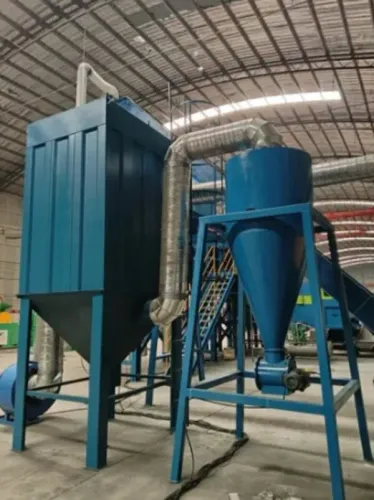
An even layer prevents overlaps at inspection and separation points. An open transfer can spill boards, metal fragments and fiberglass dust, so identify whether extraction hoods, duct connections and airflow are included in the conveyor quotation or in the dust-control system.
A conveyor is not automatically a battery-safe infeed; remove or isolate lithium-ion batteries before conveying material to size reduction.
For PCB conveyor belt equipment in Ghaziabad, settle these site details in writing:
- Incoming voltage, phase, frequency and earthing arrangement
- Panel enclosure suitable for ambient dust exposure
- Clearance for belt replacement, pulley access and jam removal
- Local service response time and spare-parts availability
Check the line-item PCB recycling conveyor inclusions list. Registration under India’s E-Waste (Management) Rules, 2022 and applicable CPCB requirements remains the recycler’s responsibility; “pollution-control compliant” wording from a supplier does not transfer that obligation.
How to Compare Suppliers Before You Accept Delivery
Before paying a deposit, ask every supplier for a line-item inclusion sheet, general-arrangement drawing and electrical schematic. Require motor and gearbox data, guarding details, belt specification, spare-parts list, installation scope and warranty exclusions. This turns PCB recycling conveyor inclusions into items you can compare rather than assumptions hidden in “conveyor.”
When seeking PCB conveyor belt equipment in Ghaziabad, give Privi actual board samples or mixed scrap, downstream machine elevations, site voltage, phase, frequency and earthing details, plus the intended loading method. Require the proposed configuration, dimensions and interfaces in writing; do not accept a design inferred from a product name.
Run acceptance on your material, not an empty belt. Record:
- Belt speed, tracking, motor current, throughput, board spacing and spillage
- Noise, emergency-stop operation, restart behaviour after stopping and jam-clearing access
- Wire entanglement, belt slip and performance at the agreed load
A no-load demonstration cannot reveal overload, slipping or wires wrapping around the drive.
| Quote type | What it usually covers | Confirm before ordering |
|---|---|---|
| Conveyor-only | Belt, frame, drive, controls and guarding | Whether the hopper, sorting cabin, installation and commissioning are excluded |
| Complete plant-system | Conveyor integrated with processing equipment | Whether shredders, separators, dust collectors, fire protection, ductwork and cable trays are included |
Obtain written confirmation of every exclusion. A conveyor-only price is not comparable with a plant-system price until those omissions are priced or accepted.
Related products
 | CONVEYER BELT FOR PCB PCB Conveyor Belt smoothly moves circuit boards between e-waste machines like dismantling, component removal, and shredders Green anti-static PVC... View product → |
 | NLET & OUT LET CONVEREY BELT WITH MEGNETIC SEPERATOR NLET & OUT LET CONVEREY BELT WITH MEGNETIC SEPERATOR Inlet Conveyor Belt: Feeds raw material from hopper onto moving rubber belt in even layer. View product → |
Frequently asked questions
What components should a PCB conveyor belt package include?
Ask for the frame, belt, pulleys, bearings, drive motor, gearbox, guards, loading and discharge sections, control panel, emergency stops, sensors, and documentation.
Which PCB conveyor belt specifications belong on a quotation?
The quotation should state belt width and length, height, speed range, load capacity, motor rating, electrical supply, belt material, incline angle, and discharge height.
How does PCB material affect the belt and loading method?
Whole PCBs, broken boards, loose components, and mixed electronic scrap need different loading arrangements based on size, weight, sharp edges, dust, and flow rate.
How should you compare suppliers before accepting delivery?
Compare the itemised scope, drawings, site dimensions, line interfaces, safety devices, spare parts, commissioning tests, warranty terms, and inspection records.
Keywords