A realistic purchase budget depends on refrigerant compatibility, recovery rate, cylinder handling and the safety equipment supplied with the machine. You will be able to compare Ghaziabad quotations, interpret claims such as “500 litres per day” and specify a system that recovers refrigerator and air-conditioner refrigerant before dismantling.
Key takeaways
- Budget ₹50,000–₹1.5 lakh before GST and accessories for portable units.
- Treat 500 litres per day as throughput, not recovered gas weight.
- Confirm refrigerant compatibility before connecting equipment to waste appliances.
- Compare cylinders, filters, hoses, installation, training and GST in every quotation.
What should you budget for a gas recovery machine in Ghaziabad?
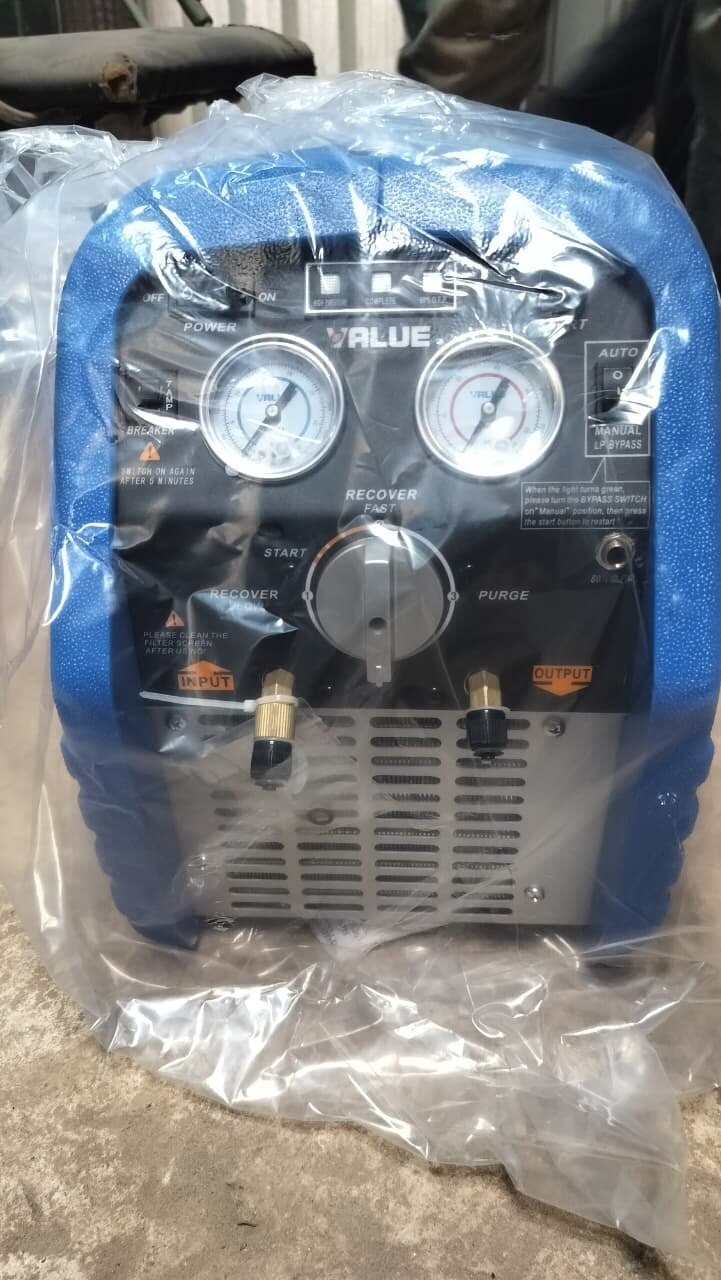
A portable single- or dual-cylinder unit gives you a starting budget of about ₹50,000–₹1.5 lakh before GST and accessories. That is an indicative gas recovery machine price in Ghaziabad, not a fixed tariff.
| Option | Budget before GST | What the quote may cover |
|---|---|---|
| Portable unit | ₹50,000–₹1.5 lakh | Single or dual-cylinder recovery machine; accessories often extra |
| Workshop package | ₹1.5–₹4 lakh | Machine, weighing scale, recovery cylinders, hoses, gauges, filtration and vacuum pump |
| Multi-station or skid-mounted system | ₹5–₹15 lakh or more | Several dismantling points, cylinder storage, automation, ventilation and fire-risk controls |
A workshop package costs more because it forms a usable recovery setup rather than supplying only the compressor. Remember that the recovery machine transfers bulk liquid or vapour refrigerant, while a vacuum pump removes residual air and moisture afterward.
The industrial gas recovery system cost changes with liquid-recovery capability, compressor type, written approval for each refrigerant, automatic shut-off, cylinder overfill protection, warranty and commissioning support. R-600a and R-290 require explicit hydrocarbon approval, ventilation and ignition control.
Request an itemised quotation instead of comparing only the machine nameplate. Ask the supplier to state whether the price includes GST, freight, installation, training, cylinders, hoses, weighing scale, vacuum pump, filters and service visits. A low base price can conceal the equipment needed to operate safely.
What does “500 litres per day” actually measure?
500 litres per day is not a recovery rate; it is a headline capacity that lacks meaning until the supplier defines the measurement. Ask whether it means refrigerant volume transferred, liquid refrigerant recovered, cylinder throughput, or a test result based on a named refrigerant, cylinder size and operating schedule.
Require these figures and safeguards in the quotation:
- Liquid-recovery rate and vapour-recovery rate, each in kg/h or kg/min
- Compressor type, motor power, voltage, maximum suction pressure and discharge pressure
- Vacuum capability, maximum cylinder size, automatic high-pressure cut-out and cylinder overfill protection
- Operating hours used to produce the 500-litre figure, plus test temperature, hose length and cylinder condition
A machine rated for vapour recovery can suffer compressor slugging, excessive pressure or nuisance shutdown if you send liquid refrigerant through the wrong hose and valve arrangement. Confirm that the stated performance applies to the refrigerator and air-conditioner sizes processed at your plant.
AHRI 740 offers a useful reference for recovery-rate and residual-refrigerant testing, but it does not prove Indian regulatory or electrical compliance. Ask for serialised test results or arrange a witnessed commissioning test using the gases, cylinder sizes and appliance charges found on site.
An e waste gas recovery machine becomes comparable with competing quotations only when those conditions appear in writing. Reject “high-speed recovery” claims that provide no test basis or separate liquid and vapour data.
Which refrigerants can the machine recover safely?
Match the machine to the sealed-system appliances at your site, not to the equipment’s horsepower. Refrigerators, freezers, air-conditioners, dehumidifiers and heat pumps may contain R-12, R-134a, R-22, R-32, R-410A, R-600a or R-290. Ordinary monitors, printers and circuit boards do not normally contain a recoverable refrigerant charge.
| Refrigerant group | Examples | Procurement requirement |
|---|---|---|
| CFC | R-12 | Written recovery approval and compatible seals and oil |
| HCFC | R-22 | Confirm pressure rating, oil compatibility and recovery rate |
| HFC | R-134a, R-32, R-410A | Confirm each gas separately; do not rely on a generic label |
| Hydrocarbon | R-600a, R-290 | Explicit flammable-gas approval, ignition control and ventilation |
Require written compatibility for every gas expected on the plant floor. R-600a and R-290 are highly flammable, so a machine approved only for CFC, HCFC or HFC recovery must not be assumed suitable. Ask about seal materials, oil compatibility, motor protection, ignition control and ventilation.
Keep cylinders segregated by refrigerant identity and condition. Mixing R-134a with R-600a or unidentified gas can turn the contents into a reclamation or disposal stream.
- Label every cylinder with gas identity, condition and date.
- Record cylinder weight before and after recovery.
- Document how operators isolate, identify and handle unknown charges.
- Treat these records and controls as core specifications for gas recovery equipment for dismantling, not secondary features.
What equipment and sequence are needed before shredding?
A bare compressor is not a complete pre-shredding system. Use this workflow:
1. Isolate the refrigerator or air-conditioner. Read the nameplate or service record to identify the refrigerant, then pierce or connect to the sealed system using the approved method.
2. Connect approved recovery hoses through a manifold or electronic gauges. Confirm the hoses, pressure-rated valves, cylinder and machine are suitable for the refrigerant.
3. Select the manufacturer-approved liquid or vapour arrangement. Never send liquid refrigerant into equipment designed only for vapour recovery; compressor slugging, excessive pressure and nuisance shutdown can result.
4. Recover the charge into a rated recovery cylinder with overfill protection. Weigh the cylinder before and after recovery, then record the refrigerant identity and net quantity.
5. Check residual pressure with the gauges before cutting pipes, removing the compressor or sending the appliance to a shredder. Venting the charge defeats the recovery process and creates a fire or environmental-compliance risk.
6. Ask whether the machine separates or drains compressor oil. Store contaminated oil in labelled, closed containers for authorised handling; do not send it into the refrigerant cylinder.
Specify recovery hoses, valves, a weighing scale, recovery cylinders, filter-driers, oil separators, leak-check equipment, earthing, ventilation, PPE and fire protection. A recovery machine transfers bulk liquid or vapour refrigerant; a vacuum pump removes remaining air and moisture after recovery. Buy both when the process requires evacuation.
An ordinary LPG cylinder or scrap cylinder is not an acceptable substitute.
How do you compare a Ghaziabad supplier’s complete quotation?
Compare quotations on identical inputs, not on the nameplate price. Send every gas recovery machine supplier near Delhi the same appliance types, refrigerants, units per shift, average charge per unit, liquid-recovery requirement, cylinder count, electrical supply, noise limit and required service response time.
- Require the technical schedule to name the compressor, motor, voltage, liquid and vapour recovery rates, pressure limits, vacuum performance, automatic shut-off settings, overfill protection, filters, gauges and hose ratings.
- Ask for a commissioning test using your appliance sizes and refrigerants. Record the test result, cylinder size, operating pressure and recovery time.
- Request separate prices for the base machine, vacuum pump, weighing scale, cylinders, spare seals, installation, training, GST and annual service. A recovery machine transfers refrigerant; a vacuum pump removes residual air and moisture.
| Quotation scope | What it includes | Procurement risk |
|---|---|---|
| Bare unit | Machine and basic controls | Accessories and commissioning remain unpriced |
| Workshop package | Pump, scale, cylinders, hoses and filters | Check ratings, warranty and training |
| Integrated station | Multiple points, controls and site services | Verify ventilation, hydrocarbon ignition control, earthing and fire protection |
India’s E-Waste (Management) Rules, 2022 cover temperature-exchange equipment, but set neither one machine price nor one universal specification. Privi can be useful when local appliance mix, station count and plant integration require engineering support in Ghaziabad. Compare documented scope and test results, not proximity or horsepower.
Related product
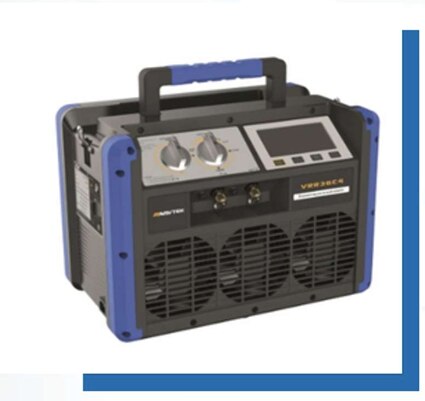 | GAS RECOVERY MACHINE USE FOR:- RECOVER AND COLLECT CAS VAPOR, ESPECIALLY IN THE OIL AND GAS INDUSTRY. View product → |
Frequently asked questions
What should you budget for a gas recovery machine in Ghaziabad?
Budget about ₹50,000–₹1.5 lakh before GST and accessories for a portable single- or dual-cylinder unit.
What does “500 litres per day” measure on a gas recovery machine?
It describes the stated daily throughput or processing capacity; ask the supplier how the figure was tested and whether it refers to gas volume, liquid recovery or operating hours.
Which refrigerants can a gas recovery machine recover safely?
Check the machine’s nameplate and technical sheet for listed refrigerants, such as R-12, R-22, R-134a or R-410A, before use. Do not connect an appliance until its refrigerant is identified and the unit is rated for it.
What equipment and sequence are needed before shredding e-waste?
Identify and isolate the appliance, recover refrigerant into a compatible labelled cylinder, remove the cylinder safely, and verify that no pressurised gas remains before dismantling or shredding.
How do you compare a Ghaziabad supplier’s complete quotation?
Compare the recovery unit, cylinders, hoses, filters, gauges, electrical supply, installation, operator training, warranty, spare parts, GST and delivery as separate line items.
Keywords